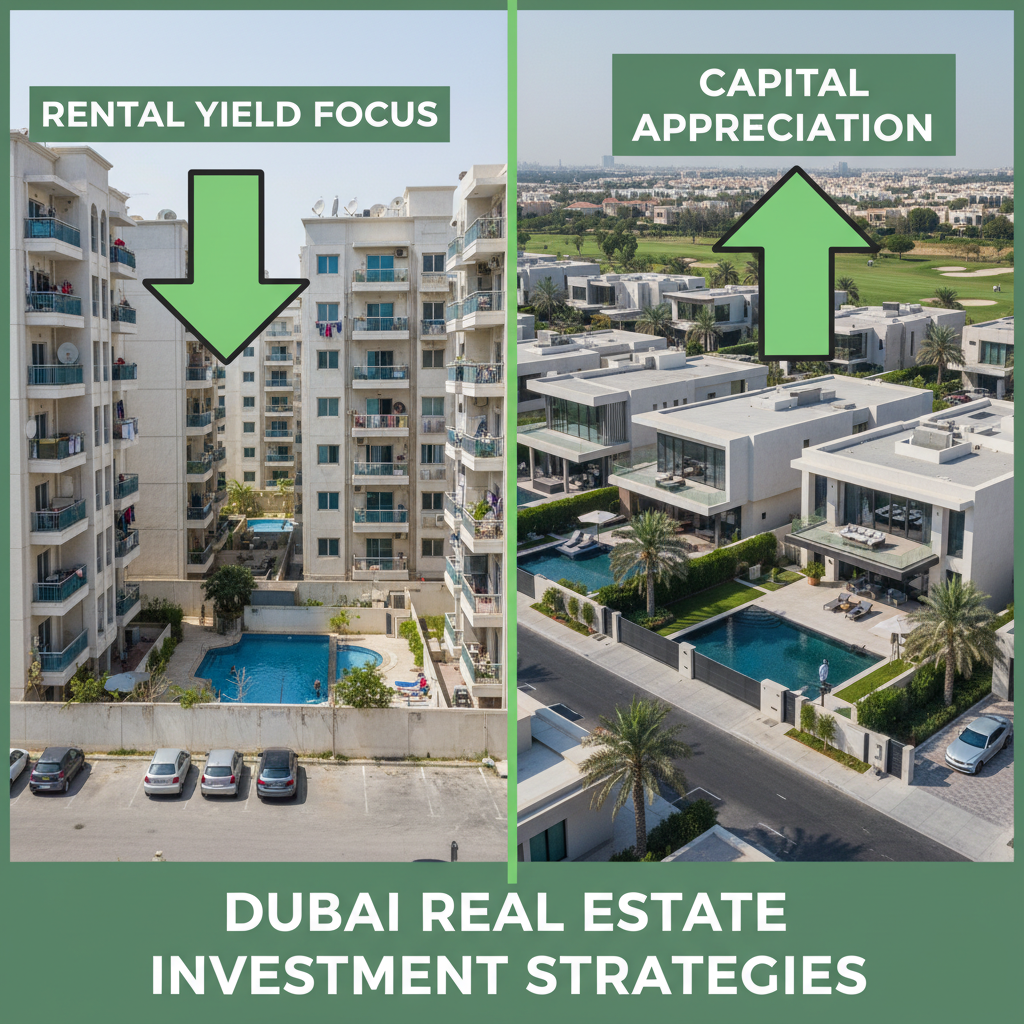
Dubai's property market offers two distinct wealth-building paths: immediate cash flow through rental income or long-term gains through capital appreciation. Most investors prioritize one strategy over the other based on holding period, liquidity needs, and risk tolerance.
What yield seekers usually want
Yield-focused investors build portfolios around monthly rental income and net cash flow. They measure performance in annual percentage returns rather than property valuation swings.
Rental yield dubai investors typically look for steady tenant demand, manageable property management fees dubai, and minimal vacancy periods. The calculation is straightforward: annual rent divided by total property cost equals gross yield. Net yield accounts for service charges, maintenance, cooling fees, and management costs.
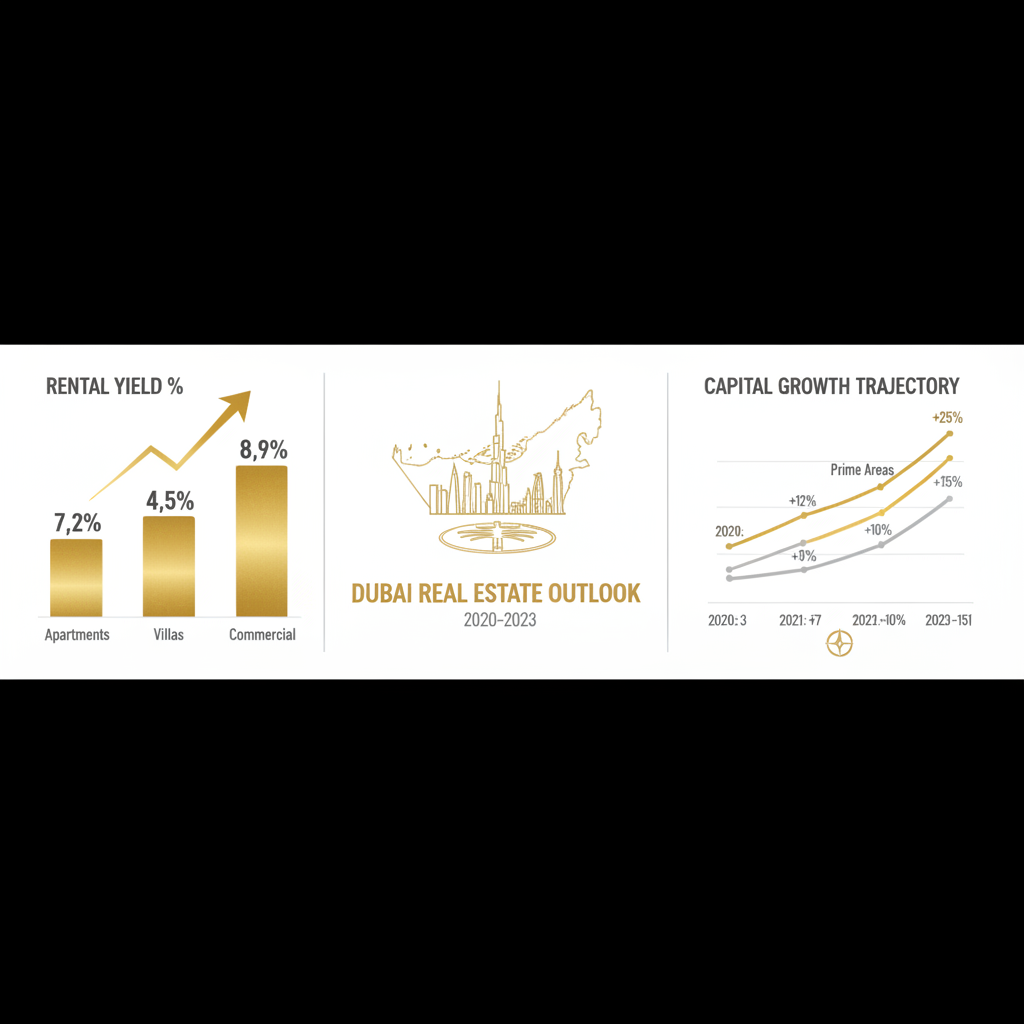
According to Engel & Völkers, the average Dubai rental yield is 6.76%, significantly outperforming London (3-4%), New York (2-3%), and Singapore (3-4%). Mid-market areas like Jumeirah Village Circle, Dubai Silicon Oasis, and International City regularly deliver gross yields between 7% and 9%.
Cash-flow-focused buyers prioritize these financial considerations:
- Immediate monthly income to cover mortgage payments or living expenses
- Payback period calculation (how many years until rental income recovers the initial investment)
- Lower entry prices that maximize yield percentages
- Tenant stability in employment-driven neighborhoods
House Finder works with yield investors to identify communities where service charges stay low, chiller-free buildings reduce landlord costs, and tenant turnover remains minimal. Studios and one-bedroom apartments in established communities typically outperform larger units on a percentage basis because demand stays deeper and entry prices remain accessible.
| Community | Gross Yield Range | Typical Property Cost | Service Charge |
|---|---|---|---|
| Jumeirah Village Circle | 7-9% | AED 750,000–1,100,000 | AED 12-16/sq ft |
| Dubai Silicon Oasis | 7-8% | AED 650,000–950,000 | AED 10-14/sq ft |
| International City | 9-11% | AED 400,000–700,000 | AED 8-12/sq ft |
| Business Bay | 6.5-6.9% | AED 1,200,000–2,000,000 | AED 18-24/sq ft |
The key trade-off for yield investors is accepting slower capital growth in exchange for predictable, recurring income. Communities offering 8% gross yields rarely see the same price appreciation as prime waterfront locations.
What growth seekers usually want
Capital appreciation investors prioritize long-term equity accumulation over monthly cash flow. They target locations where property values rise faster than the market average, understanding that today's purchase price determines tomorrow's profit margin.
Growth-focused buyers evaluate different metrics:
- Historical price appreciation over 3 to 5-year cycles
- Infrastructure development and master plan positioning
- Developer reputation and project delivery timelines
- Scarcity value in established, supply-constrained neighborhoods
According to ValuStrat data published in mid-2025, property prices in Dubai could increase by another 10% before the end of 2025. Villa prices showed particularly strong momentum, with year-on-year growth reaching 29% in certain communities.
Prime locations like Palm Jumeirah, Downtown Dubai, and Dubai Hills Estate consistently deliver double-digit annual appreciation despite offering lower rental yields. A 2020-2025 analysis found Palm Jumeirah pricing rose from approximately AED 841 per sq. ft to around AED 4,090 per sq. ft, representing growth of roughly 386%.
Off plan properties play a central role in capital growth strategies. Buyers entering projects at pre-construction prices benefit from appreciation between purchase and handover. Industry data shows average off-plan property appreciation reached 12% in the first nine months of 2025, outperforming the secondary market.
Growth investors accept several trade-offs:
- Lower initial yields (often 5-6% in premium zones)
- Higher service charges in luxury developments
- Delayed liquidity since value is locked in equity
- Greater exposure to market cycles and sentiment shifts
These investors view property as a wealth storage vehicle rather than an income generator. Exit timing becomes critical: selling during market peaks can deliver returns that dwarf years of accumulated rent.
How Dubai properties can support either strategy
Dubai's market structure accommodates both investment philosophies through clear geographic and product segmentation. Understanding where each strategy works best helps investors align property selection with financial goals.
Mid-market communities were built for yield optimization. Developments in Jumeirah Village Circle, Dubai Production City, and Dubai Residence Complex offer purpose-built rental inventory with tenant demographics that prioritize affordability and location convenience. These areas benefit from employment hubs, metro access, and family amenities that keep occupancy rates stable.
Yield performance in these neighborhoods stays resilient because purchase prices remain reasonable relative to rental demand. A one-bedroom apartment in JVC costing AED 850,000 that rents for AED 70,000 annually generates an 8.2% gross yield, well above global benchmarks.
Prime and ultra-prime locations favor capital appreciation strategies. Palm Jumeirah, Emirates Hills, and Jumeirah Bay Island attract ultra-high-net-worth buyers whose purchase decisions reflect brand recognition, lifestyle prestige, and long-term wealth preservation rather than monthly cash flow calculations.
These properties experience price growth driven by scarcity, global demand, and Dubai's positioning as a tax-efficient wealth hub. Rental yields in these zones typically range from 4% to 6%, but capital appreciation over five-year periods can exceed 100% in exceptional cases.
Off plan properties introduce a hybrid opportunity. Buyers entering projects early capture both yield potential (once the property is delivered) and capital growth (through pre-handover appreciation). Flexible payment plans reduce upfront capital requirements, allowing investors to control assets with 20-30% down payments while property values rise during construction.
House Finder evaluates off-plan opportunities based on developer track record, location fundamentals, and delivery timelines to ensure clients balance growth potential with completion risk.
Short-term rental strategies can amplify yields in tourist-heavy districts. Dubai Marina, JBR, and Business Bay properties licensed for holiday homes can achieve 8-12% gross returns compared to 5-6% on standard annual leases, though management complexity and seasonal occupancy variations increase operational demands.
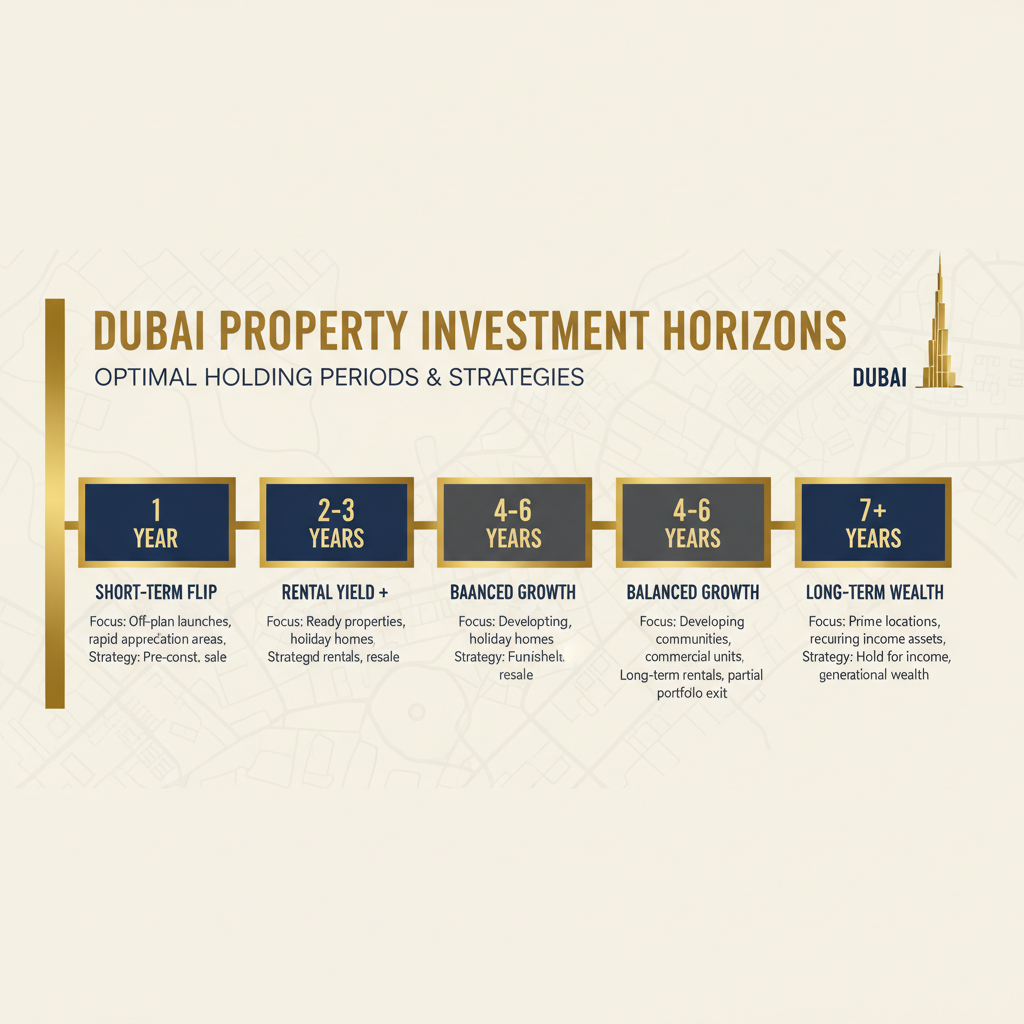
How to choose based on your holding period
Investment strategy should align with your timeline, liquidity requirements, and broader financial objectives. Dubai property performs differently across various holding periods.
One to three-year horizons favor yield strategies. Short-term investors need immediate cash flow to justify capital deployment. Communities offering 7-9% net yields provide quarterly returns that compound faster than waiting for appreciation in slower-growth areas. However, transaction costs (2% registration fees, 2% brokerage at exit) can erode gains if properties turn over too quickly.
Property management fees dubai typically range from 5-8% of annual rent when using professional services. Self-management saves costs but requires local presence for tenant sourcing, maintenance coordination, and regulatory compliance. International investors holding for short periods almost always opt for managed solutions.
Three to seven-year horizons enable balanced approaches. This timeframe allows investors to capture both rental income accumulation and moderate capital appreciation. Mid-market areas like Dubai Hills Estate, MBR City, and Town Square Dubai deliver 6-7% yields while maintaining 8-11% annual price growth, creating combined returns that exceed either pure strategy.
Balanced investors should evaluate total return: rental income collected over the holding period plus capital appreciation minus all costs (mortgage interest, service charges, maintenance, management fees, and exit transaction costs). House Finder runs these projections across multiple scenarios to identify properties offering optimal risk-adjusted returns.
Seven-plus-year horizons justify pure growth strategies. Long-term investors can absorb market cycles, benefit from Dubai's structural growth drivers (population expansion, economic diversification, infrastructure development), and compound appreciation through multiple valuation cycles.
Waterfront and master-planned communities show their strongest performance over extended periods. Areas near major infrastructure projects (metro extensions, Expo legacy developments, new free zones) experience value inflection points as connectivity improves and amenities mature.
Exit timing considerations matter regardless of strategy. Dubai property follows recognizable cycles influenced by supply pipelines, global capital flows, and policy changes. Investors should monitor delivery schedules: neighborhoods expecting 200,000+ units between 2026-2027 may see temporary rental growth moderation as landlord competition increases.
The strongest exit opportunities typically occur when rental growth accelerates (indicating tight supply-demand), transaction volumes remain healthy (confirming liquidity), and buyer sentiment stays positive (supporting price discovery).
Frequently asked questions
What is a good rental yield in Dubai?
Yields above 7% gross (5-6% net) are considered strong for Dubai apartments, significantly outperforming most global markets.
Do off-plan properties appreciate faster than ready properties?
Yes, off-plan properties averaged 12% appreciation in 2025, outpacing secondary market growth through pre-construction price capture.
Which Dubai areas offer the best capital growth?
Palm Jumeirah, Emirates Hills, and Dubai Hills Estate show the strongest historical appreciation, often exceeding 10-15% annually.
How do property management fees affect net yield?
Professional management costs 5-8% of annual rent, reducing gross yields by approximately 0.3-0.6 percentage points on average.
Can I switch strategies mid-ownership?
Yes, investors can shift from yield to growth focus by refinancing to eliminate mortgage costs or repositioning the property for different tenant segments.