Property management fees in Dubai typically range from 5% to 10% of annual rental income for long-term residential properties, but the real difference between providers isn't the percentage—it's what happens when a tenant stops paying, a leak floods your unit at midnight, or your property sits vacant for two months because nobody followed up on enquiries.
If you own investment property in Dubai, understanding these fees means looking past the marketing brochures and asking what you're actually buying for that 5%, 7%, or 10% slice of your rental income. House Finder works with landlords across Dubai who've learned this lesson the expensive way: a cheaper fee can cost you far more when service gaps show up in your bank statement.
What usually sits inside a management fee
Most property management fees in Dubai cover a core bundle of tenant-facing and administrative tasks that keep rental income flowing. You're paying for tenant screening and placement, which includes background checks, credit assessments, and employment verification to reduce the risk of non-payment or property damage. Rent collection and financial reporting sit at the centre of every agreement, handling monthly payment processing, tracking arrears, and providing transparent statements so you know exactly what's coming in and when.
Lease administration falls under the umbrella too—contract preparation, Ejari registration with the Dubai Land Department, renewal coordination, and legal compliance with RERA regulations. Maintenance coordination is another key component: arranging routine inspections, coordinating repairs through vetted contractors, and responding to emergency callouts when air conditioning units fail or plumbing issues arise.
Vacancy management rounds out the typical package, covering property marketing, listing photography, tenant showings, and reducing time between lease contracts. According to recent 2026 data, residential property management in Dubai typically ranges from 5% to 7% of monthly rent collected for standard apartments, villas, and townhouses, while commercial properties command 7% to 10% due to more complex lease structures and tenant requirements.
What usually costs extra
Even with a full-service agreement, certain items sit outside the base fee. Leasing commissions often apply when a new tenant is placed, typically adding an extra charge equivalent to one month's rent or a flat fee between AED 3,000 and AED 5,000. Some firms charge separate renewal fees each time an existing tenant extends their contract, which can add up over long-term tenancies.
Maintenance markups are another hidden line item—many management companies add a percentage on top of vendor invoices when coordinating repairs, which means you're paying more than the actual service cost. Marketing fees for professional photography, premium portal listings, or staging services may be itemised separately, particularly for higher-end properties.
Building service charges are separate from management fees entirely—these are mandatory annual costs ranging from AED 10 to AED 30 per square foot depending on building amenities and location. Ejari registration, which costs approximately AED 178 online or AED 220 at Trustee Centres in 2026, may or may not be included depending on your provider's terms.

Why the cheapest option can cost more later
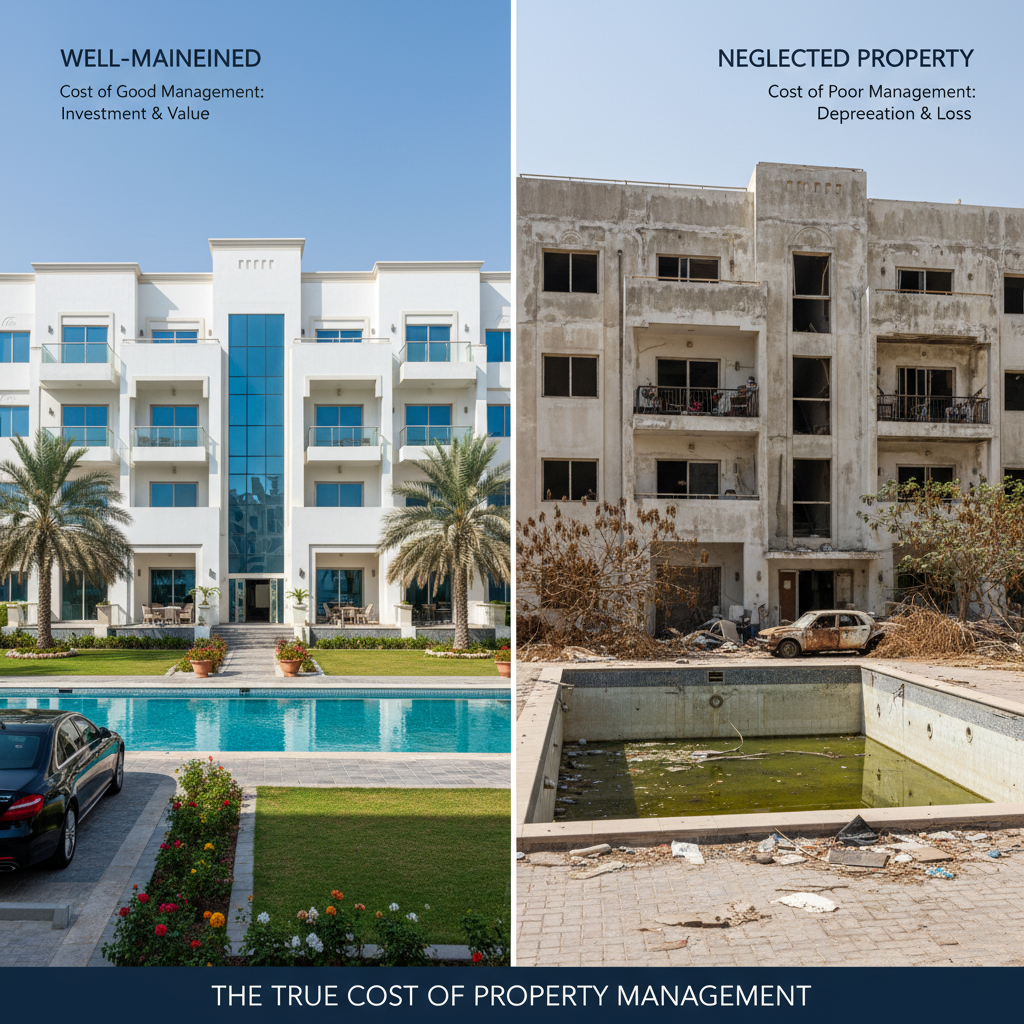
Choosing a property management provider based solely on the lowest percentage fee is one of the fastest ways to lose money in Dubai's rental market. A 4% fee that sounds attractive on paper becomes expensive when your property sits vacant for 60 days because the manager didn't respond to enquiry calls, or when a tenant dispute escalates to the Rental Dispute Centre because lease renewal notices weren't sent on time.
Vacancy is the silent killer of rental returns. Dubai's average vacancy ratecurrently sits between 4% and 7% citywide as of early 2026, but poorly managed properties can experience much longer gaps between tenants. A property that rents for AED 100,000 annually loses AED 8,333 for every month it sits empty—far more than the difference between a 5% and 7% management fee over a full year.
Slow communication compounds the problem. Budget management firms often operate with skeleton teams handling hundreds of units, which means enquiries go unanswered, maintenance requests pile up, and tenant dissatisfaction drives early terminations. According to industry data, landlords using reputable property management firms report occupancy rates 15% to 20% higher than those managing properties themselves or using discount providers.
Maintenance delays create a cascade of costs. When a minor plumbing issue isn't addressed quickly, it turns into water damage requiring full bathroom refurbishment. When air conditioning problems linger through summer months, tenants break leases or demand rent reductions. Professional property managers maintain networks of trusted contractors who respond quickly and charge fair rates, while discount providers often lack these relationships and send whoever is cheapest, regardless of quality.
The real cost of poor tenant screening
Skipping proper tenant vetting to fill a vacancy faster is another false economy. A tenant who passes a superficial background check but lacks stable employment or rental history becomes a liability the moment rent payments stop. Eviction processes in Dubai are regulated but time-consuming, and landlords lose months of rental income while legal procedures unfold.
House Finder's approach to tenant placement includes employment verification, previous landlord references, and credit checks that go beyond surface-level screening, reducing the likelihood of payment defaults or early lease breaks that disrupt cash flow and increase vacancy periods.
How to compare fee structures fairly
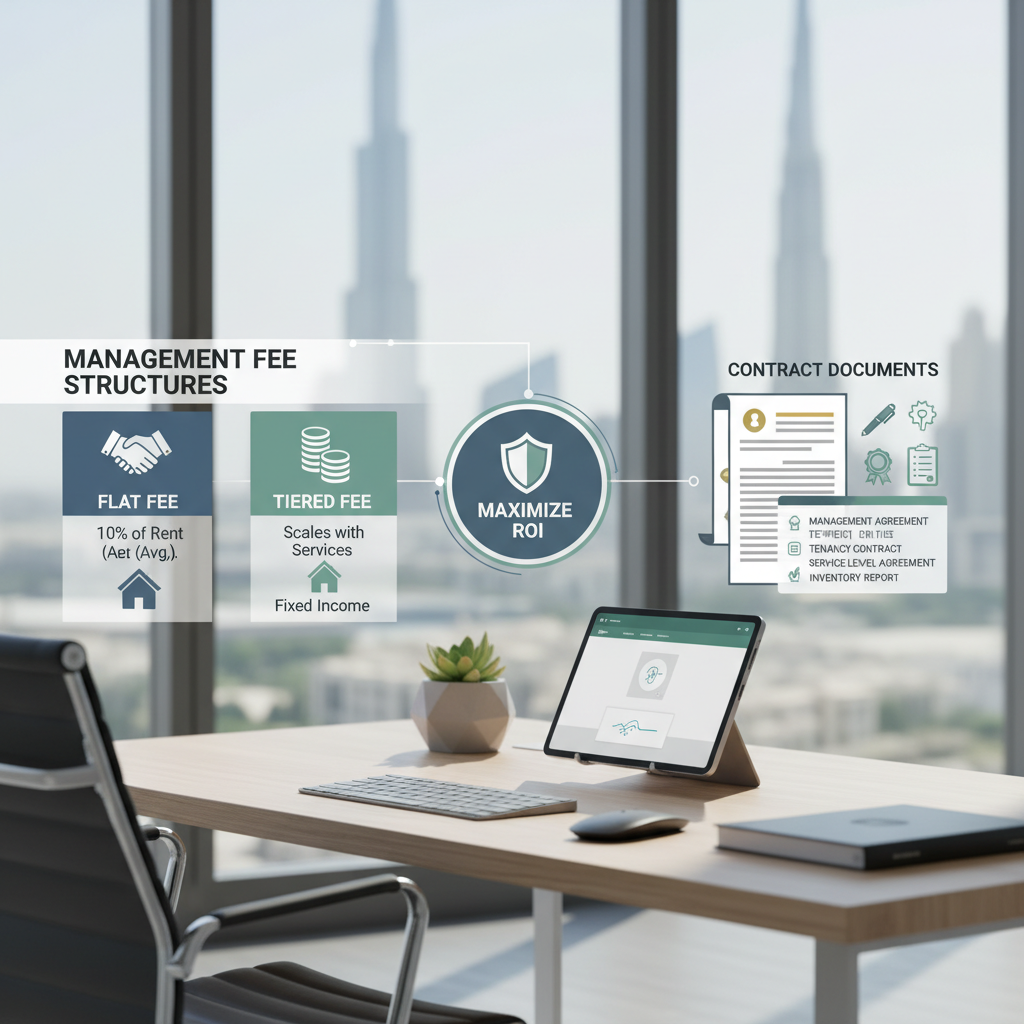
Property management pricing in Dubai follows three main models, and understanding the differences helps you evaluate what you're actually paying for. The percentage-based model is most common, charging 5% to 10% of annual rent for long-term residential properties or 15% to 25% for short-term and holiday rentals, which require more intensive operational support including guest communication, cleaning coordination, and nightly rate optimisation.
Flat-fee structures suit properties with lower rental values—if your property rents for less than AED 100,000 annually, many firms charge a minimum fee around AED 5,000 rather than a percentage, as reported in recent market analysis. This protects the management company's operational costs but can represent a higher effective percentage for landlords with modest rental yields.
Hybrid models combine a lower base percentage (typically 12% to 15%) with itemised service fees for specific activities like lease renewals, inspections, or maintenance coordination. This structure offers transparency but requires careful contract review to understand total annual costs.
Reading the fine print on inclusions
Before signing any management agreement, request a written breakdown showing exactly which services sit inside the base fee and which trigger additional charges. Industry experts recommend asking about maintenance markup percentages upfront—some firms add 10% to 20% on top of contractor invoices, which significantly impacts your net return when major repairs are needed.
Clarify approval thresholds for repair work. Good contracts specify a monetary limit below which the manager can authorise work immediately (typically AED 500 to AED 1,000) and require your approval for larger expenditures. This balance prevents minor issues from becoming emergencies while keeping you in control of significant costs.
Check whether the fee covers regular property inspections. Professional managers conduct quarterly or semi-annual walkthroughs to identify maintenance needs before they escalate, document property condition, and ensure tenants are complying with lease terms. If inspections cost extra, factor this into your total management expense.
Portfolio discounts and negotiation leverage
Landlords owning multiple properties often qualify for reduced rates. Market sources indicate that portfolio discounts can lower fees by 0.5% to 1.5% per property when you commit three or more units to the same manager, improving overall returns while maintaining service quality.
Location also affects pricing. Properties in prime areas like Dubai Marina, Downtown Dubai, or Palm Jumeirah may attract slightly higher fees because tenant expectations and service standards run higher, but these locations also command premium rents and experience lower vacancy rates, which can offset the management cost.
Questions to ask before you sign
Evaluating property management providers in Dubai requires moving beyond fee comparisons to operational fundamentals that protect your rental income. Start by confirming RERA licensing status—never work with unlicensed managers, regardless of how attractive their fees appear. Every legitimate property management company in Dubai must hold current registration with the Real Estate Regulatory Agency.
Ask about average vacancy rates and time-to-lease statistics. Professional managers track how quickly they fill units and should provide data showing their placement speed compared to market averages. Current Dubai rental market data shows well-priced properties typically rent within 20 to 35 days when managed effectively, so firms consistently taking longer may lack the marketing reach or responsiveness your property needs.
Request references from current landlord clients, specifically those who own similar property types in comparable locations. Speak to at least two or three references and ask about communication frequency, how quickly maintenance issues get resolved, and whether actual costs aligned with initial fee projections.
Service delivery and reporting standards
Understand the reporting schedule and format. Quality managers provide monthly financial statements showing rent collected, expenses paid, and net proceeds due to you, along with maintenance logs and any tenant communication summaries. Quarterly reports should include market updates and lease renewal recommendations based on current rental trends.
Clarify response timeframes for different scenarios. How quickly does the manager respond to tenant maintenance requests? What happens during after-hours emergencies? Firms with 24/7 support infrastructure handle urgent issues without waiting for business hours, preventing small problems from becoming expensive disasters.
Ask how they handle lease renewals and rent increases. Managers should proactively contact tenants 90 days before expiry, as required by RERA regulations, and provide market-informed recommendations on rental adjustments that balance maximising income with retaining good tenants and minimising vacancy risk.
Understanding the Dubai rental regulatory environment
The Dubai Land Department regulates rental increases through the RERA Rental Index, which sets maximum allowable rent adjustments based on current market rates for comparable properties. Professional managers navigate these regulations to ensure compliance while optimising your returns, handling Ejari registration, coordinating with building management, and managing disputes before they require formal mediation.
House Finder's transaction management capability extends beyond basic property management into comprehensive support covering mortgage assistance, regulatory compliance, and market intelligence that helps landlords make informed decisions about pricing, improvements, and portfolio strategy.
According to recent vacancy data, well-maintained properties in high-demand areas currently achieve occupancy rates around 96% to 98%, while the citywide average runs closer to 93% to 96%. The difference represents real money—a property renting for AED 120,000 annually at 98% occupancy generates AED 117,600 versus AED 111,600 at 93% occupancy, a gap of AED 6,000 that far exceeds typical fee differences between budget and professional management.

Frequently Asked Questions
What is the average property management fee in Dubai? Most residential properties incur fees between 5% and 10% of annual rent, with the exact rate depending on property type, location, and services included.
Are management fees negotiable in Dubai? Yes, particularly for landlords with multiple properties or long-term contracts. Portfolio discounts of 0.5% to 1.5% per property are commonly available.
Do property managers charge extra for tenant placement? Many firms charge separate leasing commissions equivalent to one month's rent or a flat fee between AED 3,000 and AED 5,000 when placing new tenants.
What happens if my property stays vacant? Most percentage-based fees only apply when rent is collected, so you don't pay management fees during vacancy periods, though some firms charge minimum fees for marketing.
How do I know if a property manager is licensed? All legitimate property management companies must be registered with RERA. You can verify licensing status through the Dubai Land Department's official website or by requesting documentation directly from the provider.
How House Finder supports Dubai landlords
House Finder combines property management with comprehensive real estate services including mortgage assistance and end-to-end transaction support. Established in 2020, the platform fills the gap between traditional brokerage and large-scale aggregators by delivering solution-driven service tailored to Dubai's unique regulatory environment and market dynamics.
Our property management approach focuses on minimising vacancy through responsive tenant communication, market-informed pricing strategies, and proactive maintenance coordination that protects property values while maximising rental yields. Landlords receive transparent reporting, regulatory compliance support, and direct access to Dubai market intelligence that informs strategic decisions about lease renewals, property improvements, and portfolio growth.
The combination of local market expertise, established contractor networks, and integrated service delivery means your property receives the attention that protects your investment rather than getting lost in a portfolio of hundreds of units managed by rotating staff with limited accountability.