A Dubai short term rental permit is mandatory for property owners wanting to legally operate holiday homes. Issued by the Department of Economy and Tourism (DET), the permit requires ownership proof, NOC approvals, safety compliance, and annual fees starting from AED 1,520, with renewal every 12 months to avoid fines up to AED 100,000.
If you're thinking about converting your Dubai apartment or villa into a short term rental, you're tapping into one of the most profitable property strategies in the UAE. Dubai welcomed over 18 million overnight visitors in 2024, creating consistent demand for furnished holiday homes.
But here's the thing: running a compliant operation isn't optional. Without the right permit from DET, you risk heavy fines, listing takedowns, and legal action. This checklist walks you through every document, fee, and compliance step you need to operate legally and confidently in 2026.
House Finder works with property owners across Dubai Marina, Downtown, Palm Jumeirah, and Business Bay to identify investment-ready units and manage compliance from day one.
What a Short Term Rental Permit Covers in Dubai
Legal Framework and Authority
The Department of Economy and Tourism (formerly DTCM) oversees all short term rental activity in Dubai. Every furnished apartment or villa rented for stays under six months requires a valid DET Holiday Home Permit.
This isn't a suggestion. It's a legal requirement backed by Dubai's tourism regulations and enforced through platform monitoring, building inspections, and guest registration audits.
Operating without a permit can result in fines starting at AED 5,000 and escalating to AED 100,000 for repeat offences. Platforms like Airbnb and Booking.com now require permit numbers for all Dubai listings.
Ownership and Tenancy Rules
You can apply for a DET permit if you own the property outright or hold a valid tenancy contract with landlord approval.
Property owners submit their title deed. Tenants must provide a signed No Objection Certificate (NOC) from the landlord, formatted per the official DET template, plus a copy of their tenancy contract.
Either way, the property must be registered under your name or your authorized company. Individual owners can register up to 8 units under a single operator account. Beyond 8 units, you need a trade license and must register as a professional holiday home operator.
What the Permit Authorizes
The DET permit allows you to rent the entire property to tourists and short-stay guests for periods ranging from one night to 90 days per booking.
You cannot rent individual rooms. The entire unit must be available to a single guest group at a time. Shared accommodation models are not permitted under Dubai's holiday home framework.
The permit also requires you to collect and remit the Tourism Dirham fee, register every guest in the DET system within 3 hours of check-in, and maintain comprehensive insurance coverage for the duration of the permit.
Building and Community Approvals
Not every building in Dubai permits short-term rentals. Developers and owners' associations (OAs) control whether holiday homes are allowed in their communities.
Most buildings in Dubai Marina, JBR, Downtown Dubai, Business Bay, and Palm Jumeirah permit short-term rentals. Some communities in Arabian Ranches, The Springs, and certain villa compounds explicitly prohibit them.
Before applying for your DET permit, confirm your building allows holiday homes. Request a written NOC from your OA or building management. Without it, DET will reject your application.
Documents You Need Before Applying for a DET Permit
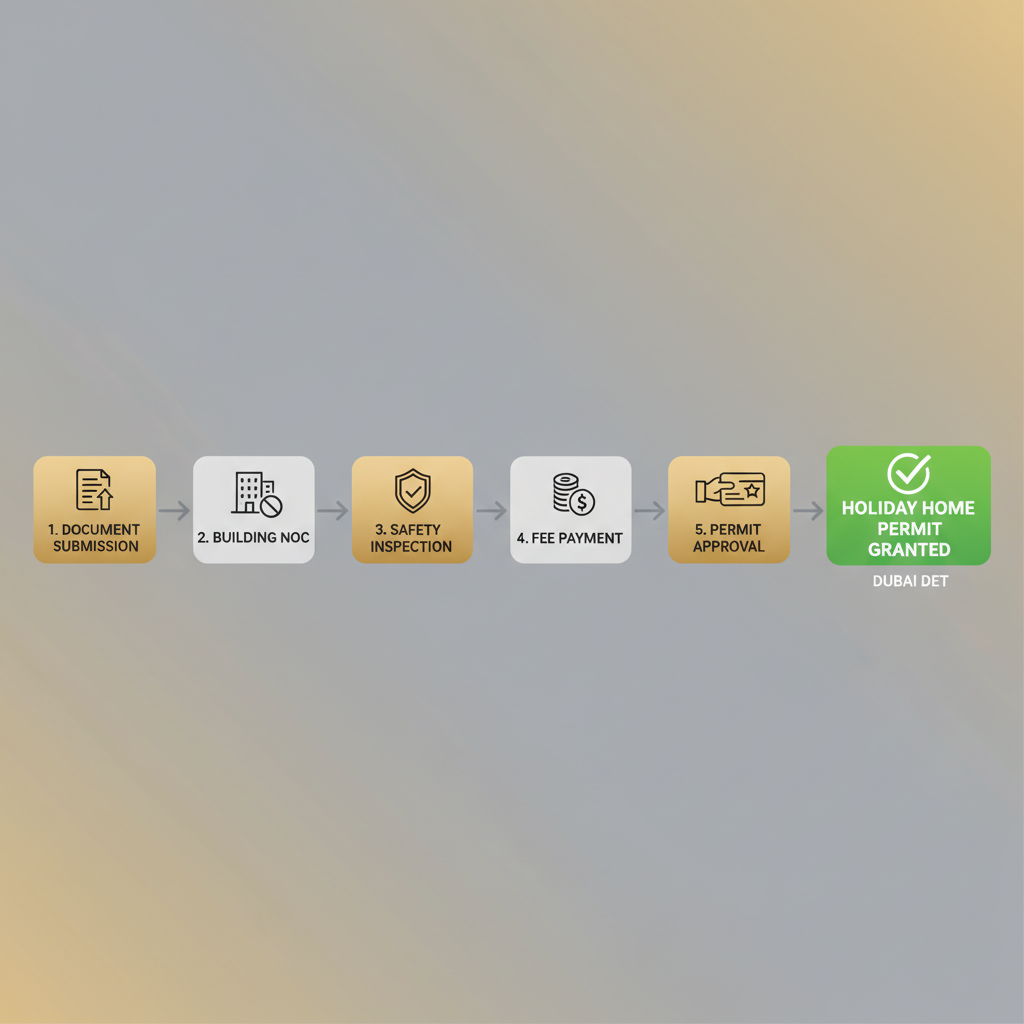
Core Identity and Ownership Documents
You'll need a valid Emirates ID or passport copy. If you're a UAE resident, your Emirates ID must be current. Non-residents can apply using a passport.
For property owners, submit a copy of your title deed showing the property address, unit number, and registered owner name. If the title deed hasn't been issued yet, provide the Oqood (interim registration certificate) plus proof of payment.
For tenants applying with landlord permission, submit your signed tenancy contract, a landlord NOC using the official DET template, and the landlord's Emirates ID or passport.
Utility and Building Documentation
A recent DEWA bill (Dubai Electricity and Water Authority) is mandatory. The bill must be at least 3 months old and issued in the name of the property owner or the registered tenant.
If the DEWA account is in someone else's name, you'll need a signed authorization letter from the account holder.
You also need a building NOC from your owners' association or property management company. This confirms the building permits short-term rentals and that your unit is approved for holiday home use.
Company and Trade License Documents
If you're applying as a company or professional operator, you'll need your Dubai trade license, a copy of your Memorandum of Association, and authorized signatory documentation.
Companies operating multiple units must register under a DET operator license. The trade license activity must include "vacation home rental" or a similar classification approved by the Department of Economic Development.
Property Photos and Safety Evidence
DET requires high-quality photos of your property showing all rooms, furniture, kitchen equipment, bathrooms, and exterior views.
You must also provide photos of your safety equipment: smoke detectors installed in every room, a fire extinguisher (visible and accessible), a first-aid kit, and clear emergency exit signage.
These aren't cosmetic requirements. DET conducts random inspections, and properties that fail safety checks can have their permits suspended immediately.
Insurance and Authorization Forms
You need comprehensive property insurance covering guest liability, property damage, and third-party claims. The policy must remain active throughout your permit validity.
DET provides an official authorization form during the application process. This form must be signed by the property owner (or authorized tenant) and uploaded alongside your supporting documents.
Key Fees and Renewal Timing for Dubai Holiday Home Permits
Initial Registration Fee
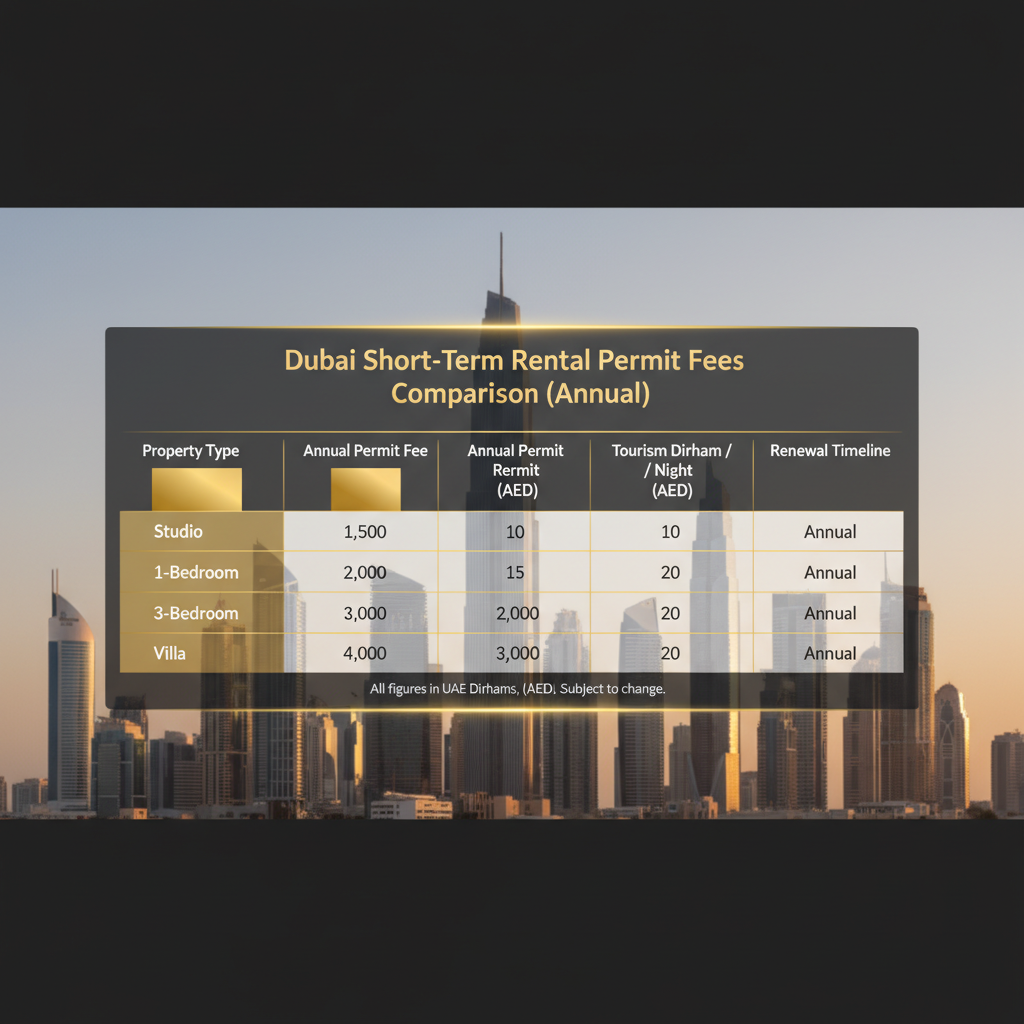
The one-time registration fee is AED 1,520. This includes AED 1,500 for the base registration, AED 10 for the knowledge fee, and AED 10 for the innovation fee.
This fee applies when you first create your DET Holiday Homes operator account. You pay it once, and it covers your account setup. It does not need to be paid again at renewal unless you create a new operator account.
Annual Unit Permit Fees
Each property you register requires an annual unit permit. Fees are calculated based on the number of bedrooms and range from AED 370 to AED 1,270 per unit per year.
Studio and 1-bedroom units typically fall in the AED 370 to AED 600 range. Larger 2- and 3-bedroom apartments cost between AED 800 and AED 1,270 annually. Villas with 4 or more bedrooms may incur higher permit fees.
These fees are paid annually and must be renewed every 12 months to keep your permit active.
Classification and Inspection Costs
During the application process, you'll classify your property as either Standard or Deluxe. This classification determines your Tourism Dirham rate.
There's a small classification certificate fee of approximately AED 50 per unit. Some properties may also require a physical inspection, which costs around AED 320.
Inspections are not always mandatory, but DET reserves the right to inspect any unit before issuing or renewing a permit.
Tourism Dirham Collection
The Tourism Dirham is a nightly fee you collect from guests and remit to DET monthly. It's not a permit cost, but it's a recurring compliance obligation.
Standard properties charge AED 10 per bedroom per night. Deluxe properties charge AED 15 per bedroom per night. The fee applies for up to the first 30 consecutive nights of any stay.
You must submit the collected Tourism Dirham to DET by the 15th of each month via the Holiday Homes portal. Late submissions can result in fines or permit suspension.
Municipality and VAT Considerations
Dubai also levies a 10% municipality fee on all booking revenue. This is separate from the Tourism Dirham and is remitted to Dubai Municipality.
If your annual turnover exceeds AED 375,000, you must register for VAT and charge 5% on your rental income. Property owners below this threshold are not required to register, but most professional operators do.
Note: As of April 2026, the Dubai government has temporarily deferred collection of Tourism Dirham and sales fees for three months as part of an economic support package. However, you are still required to maintain accurate records and prepare for resumed collection in July 2026.
Renewal Deadlines and Late Penalties
Your DET permit is valid for 12 months from the issue date. You must renew it before expiry to continue operating legally.
The renewal window opens 30 days before your permit expires. If you miss the renewal deadline, your permit lapses and cannot be renewed. You'll need to apply for a new permit and pay the full registration fee again.
Late renewals can also trigger listing suspensions on Airbnb and Booking.com, as these platforms regularly verify permit validity.
How House Finder Helps Owners Stay Compliant with DET Regulations
Property Selection and Investment Guidance
Not every Dubai property works as a short term rental. Location, building rules, and unit configuration all affect your permit eligibility and profitability.
House Finder specializes in identifying investment-ready properties in high-demand areas like Dubai Marina, JBR, Downtown, and Palm Jumeirah. Our team verifies building NOC availability before you commit to a purchase or lease.
We provide detailed yield analysis, occupancy forecasts, and permit feasibility assessments for every property we present. This saves you time and reduces the risk of investing in a unit that can't be legally operated as a holiday home.
Document Preparation and Application Support
The DET application process requires precise documentation. Missing or incorrect documents lead to rejection and delays.
House Finder assists with document preparation, including title deed verification, DEWA bill collection, NOC coordination with building management, and insurance policy setup.
We work with licensed property managers and legal advisors who handle the full DET submission process on your behalf. You don't need to navigate the portal yourself or worry about missing a requirement.
Ongoing Compliance and Renewal Management
Compliance doesn't end when your permit is issued. You need to register every guest, submit monthly Tourism Dirham reports, and renew your permit annually.
Our property management partners handle guest check-ins, upload ID copies to the DET system within the required 3-hour window, and track Tourism Dirham collection and remittance.
We also send renewal reminders 60 days before your permit expires, ensuring you never miss a deadline or face a lapsed permit.
Building Relationships and NOC Access
Securing an NOC from your owners' association can be the hardest part of the permit process, especially in buildings with restrictive policies or slow management companies.
House Finder has established relationships with OA boards, building managers, and developers across Dubai. We know which communities welcome short-term rentals and which require additional deposits or approvals.
This local knowledge speeds up the NOC process and reduces friction during your application.
Market Insight and Exit Strategy Planning
The Dubai property market moves fast. Rental yields shift, regulations evolve, and new supply enters high-demand areas.
House Finder provides ongoing market analysis to help you understand whether your property remains competitive as a short term rental or if a pivot to long-term leasing or sale makes more financial sense.
We're a full-service real estate platform. Whether you're buying your first investment unit, managing a 10-property portfolio, or planning an exit, we provide the data and support you need to make confident decisions.
Frequently Asked Questions About Dubai Short Term Rental Permits
Can I apply for a DET permit if I'm renting the property? Yes, but you need a valid tenancy contract and a signed No Objection Certificate from your landlord using the official DET template.
How long does DET permit approval take? Approval typically takes 1 to 3 business days once all documents are submitted correctly. Incomplete applications can take 3 to 4 weeks.
Do I need a separate permit for each property? Yes. Each apartment or villa requires its own unit permit, even if you operate multiple properties under one operator account.
What happens if I operate without a permit? You risk fines starting at AED 5,000, platform delisting, building penalties, and potential legal action from DET or Dubai Municipality.
Can I rent individual rooms in my property? No. Dubai's holiday home regulations require you to rent the entire unit to a single guest group. Room-only rentals are not permitted under the DET framework.