Short-term rentals in Dubai can deliver higher gross returns than long-term leases, but only when occupancy stays above 65%, operating costs are managed tightly, and owners account for the full workload. Before switching strategies, property owners must compare net income after management fees, compliance costs, and vacancy—not just headline revenue.
Dubai's rental market offers two distinct paths for property owners. Short-term rentals promise flexibility and premium nightly rates. Long-term leasing delivers predictable monthly income with minimal hands-on involvement. The right choice depends on your property location, available time, and tolerance for operational complexity. This guide explains exactly when the numbers favour short-term rentals and when long-term leasing remains the safer, simpler move.
What short-term rentals change financially
Short-term rentals in Dubai can generate gross annual revenue between AED 150,000 and AED 200,000 for well-located one-bedroom apartments, compared to AED 90,000 to AED 105,000 for the same unit on a long-term lease. However, gross revenue tells only part of the story. Operating expenses for short-term rentals typically consume 25% to 55% of gross income, depending on whether you self-manage or hire professional operators.
According to Airbtics data, the median Dubai short-term rental achieved 73% occupancy with an average daily rate of AED 638 in 2025–2026. In prime locations like Dubai Marina, Business Bay, and Palm Jumeirah, occupancy can reach 80% or higher during peak season (October to April). Outside these areas, occupancy drops to 40% to 50%, eroding the financial advantage.
Revenue potential and volatility
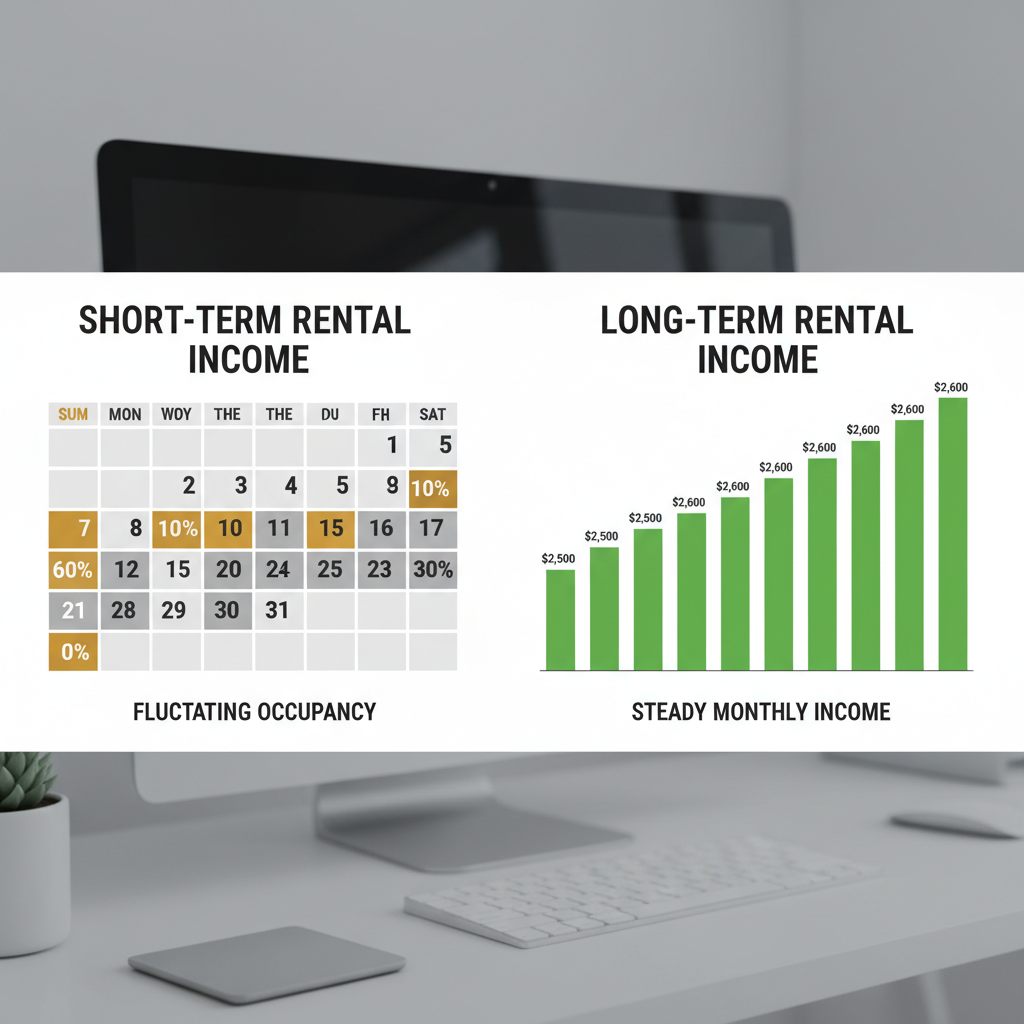
Short-term rental revenue fluctuates month to month. Peak winter months can deliver nightly rates 30% to 40% above annual averages, while summer months see both lower rates and reduced demand. A Property Finder analysis found that well-managed units in strong locations can achieve gross yields approaching 9%, but only when pricing, cleaning, and guest experience are managed professionally.
Long-term leases offer stable, predictable income. Landlords receive the same rent each month, with vacancy risk limited to the handover period between tenants. Dubai's rental market recorded 6.2% year-over-year growth in December 2025, with average apartment yields between 6.5% and 7%. For owners prioritising simplicity and cash flow certainty, long-term leasing delivers consistent returns without operational stress.
Operating costs owners underestimate
Professional property management for short-term rentals typically costs 15% to 25% of gross revenue. According to Houst, full-service management starts at 12% for dedicated full-time rental properties, rising to 18% for part-time or owner-use arrangements. These fees cover listing optimisation, dynamic pricing, 24/7 guest communication, cleaning coordination, and maintenance oversight.
Additional costs include:
- Cleaning and turnover: AED 150 to AED 500 per guest changeover
- Tourism Dirham fee: AED 10 to AED 15 per bedroom per night, collected from guests and remitted to Dubai Tourism
- DTCM permit: AED 1,520 to AED 3,720 annually, depending on property classification
- Furnishing and setup: AED 20,000 to AED 60,000 for initial preparation
- Utilities: DEWA, internet, and cooling charges (often AED 500 to AED 1,200 monthly)
- Maintenance and repairs: Guest turnover accelerates wear and tear on furniture, appliances, and finishes
Long-term rental costs are simpler. Management fees for annual leases average 5% of rent, covering tenant placement, lease preparation, and rent collection. Service charges, insurance, and minor maintenance remain, but turnover costs are eliminated and vacancy is minimal.
The occupancy threshold
A Sands of Wealth analysis found that short-term rentals need to maintain at least 65% to 70% annual occupancy to outperform long-term rental income in Dubai. Below that threshold, vacancy costs, management fees, and cleaning expenses erode the revenue advantage.
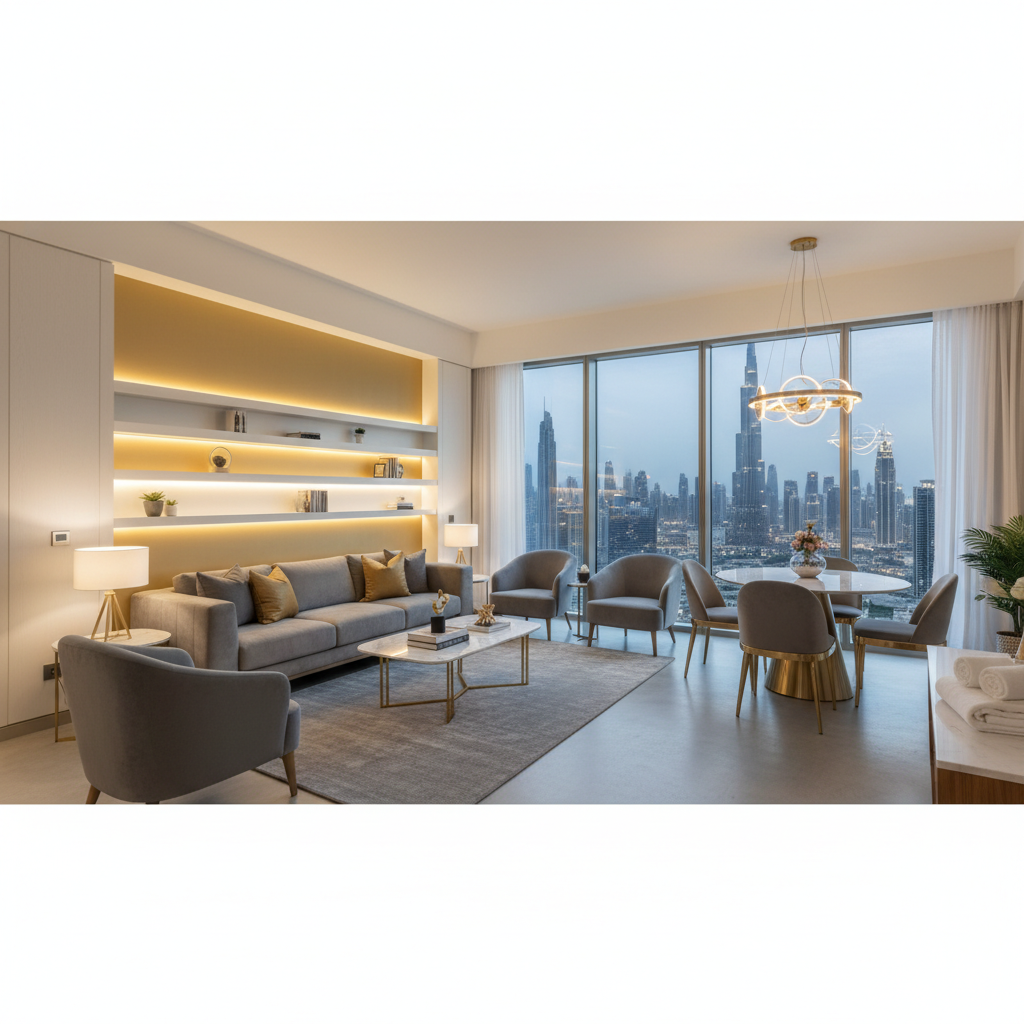
In tourist-heavy locations like Downtown Dubai and Dubai Marina, hitting this threshold is achievable with professional management and competitive pricing. In residential communities farther from attractions, occupancy rarely exceeds 50%, making long-term leasing the more profitable option.
The workload owners often underestimate
Short-term rental success depends on operational execution. Owners who underestimate the workload often burn out within months or see their properties underperform due to inconsistent guest experience.
Daily operations and guest turnover
Every booking requires guest communication before, during, and after the stay. Check-in coordination, key exchanges, and issue resolution must happen 24/7. According to Dubai Real Estate Club, self-managing owners handle booking platforms, calendar synchronisation, pricing adjustments, review responses, and guest inquiries—tasks that quickly become a full-time job.
Cleaning and inspection happen after every checkout, often with same-day turnarounds. Linen changes, restocking consumables, damage checks, and reporting all fall to the owner or management company. A single negative review due to cleanliness or maintenance issues can damage bookings for weeks.
Compliance and licensing requirements
Every short-term rental property in Dubai requires a valid DTCM Holiday Home permit. Operating without one carries fines starting at AED 5,000 and can reach AED 200,000. Platforms like Airbnb and Booking.com now require permit numbers before publishing listings, and authorities actively monitor compliance through data-sharing agreements.
The permit application requires:
- Title deed or valid tenancy contract with landlord approval
- Emirates ID or passport
- Recent DEWA bill
- No-objection certificate (NOC) from building management
- Safety compliance: smoke detectors, fire extinguishers, emergency exits
- Full furnishing to DET standards
Guest check-in data must be logged in the DET portal within three hours of arrival. The Tourism Dirham fee must be collected and remitted monthly. Permit renewal is annual, with penalties for late submission.
Long-term leasing involves minimal compliance. Tenancy contracts are registered through Ejari with Dubai Land Department. Rent increases are capped by the Smart Rental Index. There are no guest registration requirements, no nightly fees, and no annual inspections.
Response speed and guest expectations
Short-term rental guests expect hotel-level service. Maintenance issues, Wi-Fi problems, or appliance failures require same-day resolution. Delayed responses lead to negative reviews, which directly impact future bookings and revenue.
Professional management companies maintain vendor networks and 24/7 support teams to handle emergencies. Self-managing owners must be available around the clock or risk damaging their listing's reputation.
Long-term tenants report issues through standard maintenance channels. Response times are measured in days, not hours. The relationship is contractual, not transactional, reducing the pressure for instant resolution.
When long-term leasing is the safer move
Long-term leasing delivers stability, simplicity, and predictable net returns. For many Dubai property owners, it remains the smarter choice.
Stability and cash flow predictability
Long-term leases in Dubai are typically signed for 12 months, with rent paid in one to four cheques. Owners receive the same income each month without worrying about occupancy fluctuations, seasonal demand, or guest cancellations.
According to Engel & Völkers, average rental yields for Dubai apartments reached 7.07% in December 2025, with villas at 4.93%. These yields are net of minimal operating costs and deliver consistent, tax-free income. Dubai imposes no income tax on rental earnings, no capital gains tax, and no property tax—advantages that compound returns over time.
Short-term rental income swings month to month. Summer months see occupancy drop 20% to 30% below winter peaks. A three-week vacancy in a slow month can wipe out an entire quarter's profit margin.
Simplicity and lower operational burden
Long-term leasing requires minimal ongoing involvement. Once a tenant is placed, landlords collect rent, handle occasional maintenance requests, and renew or replace tenants annually. There are no daily check-ins, no cleaning schedules, no guest messaging, and no review management.
Property management for long-term rentals is straightforward. Companies like House Finder offer full-service tenant placement, lease management, and rent collection for a fraction of the cost and effort required by short-term operations. Owners can remain hands-off while maintaining steady income.
Short-term rentals demand active management or significant fees paid to operators who handle the workload. Even with professional management, owners must monitor performance, approve pricing strategies, and maintain property presentation standards.
Net return comparison
A Dubai Real Estate Analysis compared a AED 1.4 million one-bedroom apartment in Dubai Marina under both strategies. The short-term rental scenario, with 82% occupancy and professional management at 22% of revenue, delivered a 6.05% net yield. The equivalent long-term lease at AED 65,000 annual rent, with 8% management fees, returned 4.27% net yield.
The short-term advantage was 1.78 percentage points—or AED 24,913 annually. However, this advantage disappears if occupancy drops below 70%, if the property is located outside prime tourist zones, or if the owner underestimates maintenance and replacement costs.
For properties in residential communities like Jumeirah Village Circle, Dubai Silicon Oasis, or Arabian Ranches, long-term leasing consistently outperforms short-term rentals on a net basis. Tenant demand is strong, vacancy is low, and operating costs are minimal.
Risk and market exposure
Long-term leasing insulates owners from short-term market shocks. If tourism slows, geopolitical events impact travel, or new supply floods the market, short-term rental occupancy and rates fall immediately. Long-term tenants are locked into 12-month contracts, providing income continuity even during market downturns.
Dubai's rental market is entering a more balanced phase. With 76,000 new units expected in 2025 and continued population growth, rental demand remains strong but price growth is moderating. Long-term leasing benefits from this stability. Short-term rentals face increased competition as more owners enter the market.
How House Finder can help owners choose the right route
House Finder understands that the best rental strategy depends on your property, location, and financial goals. Whether you're evaluating short-term rental potential or seeking stable long-term income, our team provides the market insight and management support to maximise returns.
For owners considering short-term rentals, House Finder offers:
- Market analysis: We assess your property's location, unit type, and competitive positioning to estimate realistic occupancy, nightly rates, and net income under a short-term rental strategy.
- Compliance support: Our team guides you through DTCM permit applications, building approvals, and ongoing regulatory requirements to ensure full compliance from day one.
- Professional management: If short-term rental makes sense for your property, we connect you with trusted operators who handle furnishing, listing creation, dynamic pricing, guest communication, cleaning, and maintenance.
For owners prioritising stability and simplicity, House Finder specialises in long-term leasing:
- Tenant placement: We market your property, screen tenants, and handle lease preparation to minimise vacancy and secure reliable, long-term occupants.
- Rent optimisation: Using Dubai Land Department data and local market knowledge, we set competitive rents that maximise income while ensuring tenant retention.
- Ongoing management: From rent collection to maintenance coordination, we manage the tenant relationship so you receive consistent income without operational involvement.
House Finder's advantage is local execution. Established in 2020, we've built deep knowledge of Dubai's rental market across both short-term and long-term segments. We don't push one strategy over another—we help you choose the approach that fits your property, timeline, and return expectations.
Many owners assume short-term rentals always generate higher returns. The reality is more nuanced. Location, property type, management quality, and owner availability all influence net profitability. House Finder runs the numbers with you, comparing gross revenue, operating costs, and net yield under each scenario. We then execute the strategy that makes the most financial sense.
For investors building portfolios, House Finder also supports mixed strategies. Some properties—such as studios in Dubai Marina or apartments in Downtown—perform well as short-term rentals. Others—like family villas in Jumeirah or two-bedroom units in mid-market communities—deliver better returns through long-term leasing. We help you allocate each property to the strategy that maximises overall portfolio performance.
Whether you're a first-time landlord or an experienced investor, House Finder provides the market insight, compliance support, and end-to-end management to turn your Dubai property into a reliable income stream. We handle the complexity so you can focus on returns.
Frequently Asked Questions
What is the minimum occupancy rate needed for short-term rentals to beat long-term leasing in Dubai?
Short-term rentals typically need 65% to 70% annual occupancy to outperform long-term leasing after accounting for management fees, cleaning costs, and compliance expenses.
How much does professional short-term rental management cost in Dubai?
Professional management fees range from 15% to 25% of gross booking revenue, covering listing optimisation, guest communication, cleaning coordination, pricing, and compliance reporting.
Do I need a permit to operate a short-term rental in Dubai?
Yes. Every short-term rental requires a valid DTCM Holiday Home permit. Operating without one carries fines starting at AED 5,000 and platforms require permit numbers before listing.
What are the main costs of running a short-term rental in Dubai?
Key costs include management fees (15–25%), cleaning per turnover (AED 150–500), Tourism Dirham (AED 10–15 per bedroom per night), annual DTCM permit (AED 1,520–3,720), and furnishing/setup (AED 20,000–60,000).
Which Dubai areas work best for short-term rentals?
Dubai Marina, Downtown Dubai, Business Bay, and Palm Jumeirah achieve the highest occupancy and nightly rates due to proximity to tourist attractions, metro stations, and business districts.