UAE Real Estate vs Dubai Where Buyers Get Better Value
Dubai accounts for 44% of the UAE residential market in 2025, but savvy investors are looking beyond city-center apartments to capture higher rental yields in Abu Dhabi and emerging emirates. Understanding where each market delivers liquidity, income, or affordability is essential for making the right call in 2026.
Why this comparison matters right now
The UAE residential market is forecast to reach $219 billion by 2031, growing at 8.71% annually. Dubai recorded AED 252 billion in Q1 2026 transactions alone, a 31% year-on-year jump, while Abu Dhabi saw transaction values rise 48% in the first nine months of 2025.
These numbers reflect strong fundamentals, but they also reveal different buyer opportunities. Dubai offers unmatched liquidity and global recognition. Other emirates deliver rental yields between 6% and 8% on property priced 30 to 40% lower per square foot. House Finder helps clients weigh these variables against holding period, income goals, and exit strategy.
Dubai's transaction velocity remains unmatched
Dubai processed over 47,996 sales transactions in Q1 2026, with total sales value reaching AED 176.7 billion. The average price per square foot climbed 12.5% year-on-year to AED 1,759, signaling a market driven by price strength rather than volume alone.
Off-plan properties accounted for 70% of total transaction volume, reflecting deep developer pipelines and high buyer confidence. Studios and one-bedroom apartments form the backbone of transaction activity, supported by accessible entry prices and rental yields that remain attractive by global standards.
Other UAE markets offer different risk-return profiles
Abu Dhabi recorded approximately 6,500 new residential units expected in 2026, compared to Dubai's 120,000. This tighter supply supports price and rental growth of 8 to 12% in 2026, according to Cushman & Wakefield Core.
Gross rental yields in Abu Dhabi typically range between 6% and 8%, particularly in Al Reem Island and Yas Island. Average net rental yield for apartments sits around 4.2% after costs, but entry prices remain 30 to 40% lower than equivalent Dubai neighborhoods.
Sharjah and Ras Al Khaimah offer even stronger affordability, with Ras Al Khaimah anticipated to record a 10.36% CAGR through 2031 as buyers seek more affordable villas while retaining access to Dubai's job market.
Population growth underpins both markets
Dubai's population surpassed 4 million residents in 2025, with the Dubai 2040 Urban Master Plan targeting 5.8 million permanent residents by 2040. The UAE added approximately 225,000 new residents in 2025 alone, with the IMF projecting UAE GDP growth at 5.0% for 2026, the fastest in the GCC.
This population expansion fuels sustained housing demand across all emirates, particularly in master-planned suburban communities offering larger living spaces, family-friendly amenities, and quality schools. House Finder tracks demographic shifts to identify high-growth suburban areas before pricing accelerates.
What Dubai usually offers investors
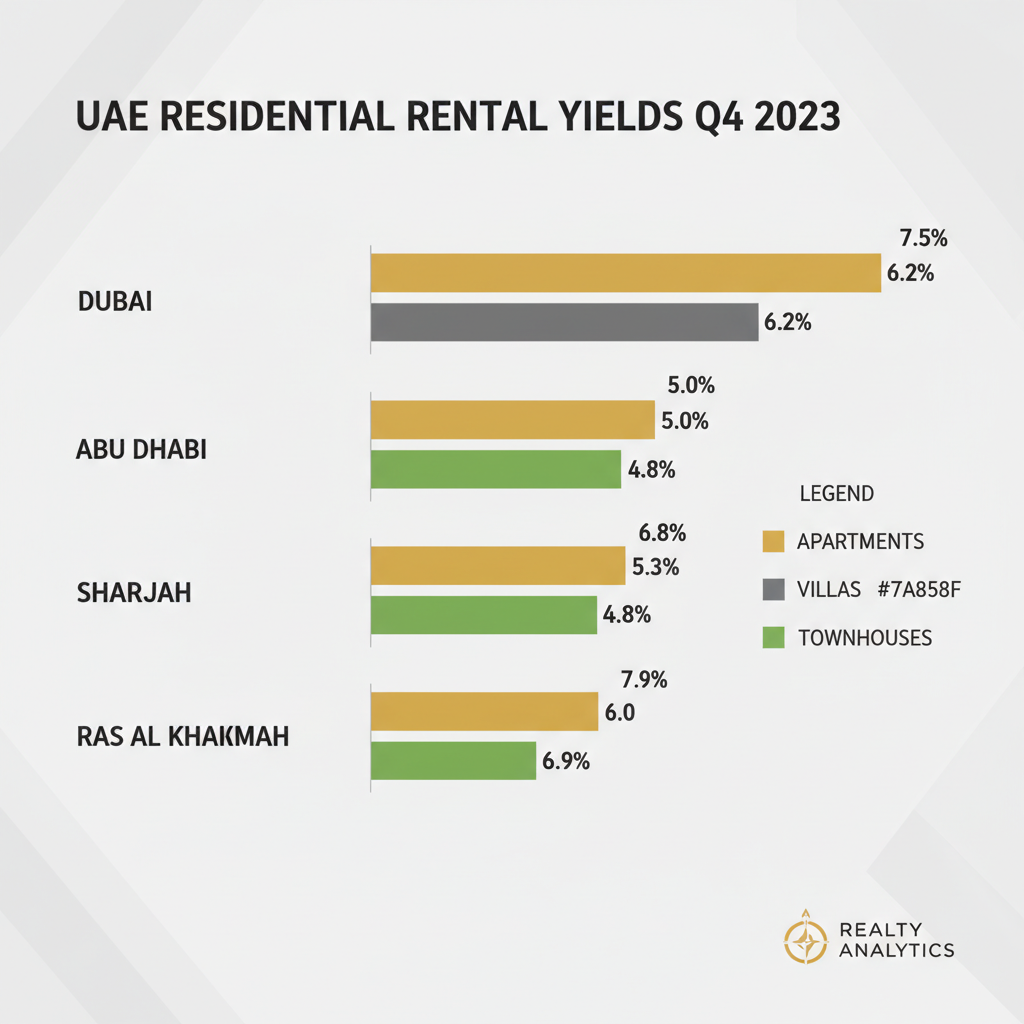 Dubai delivers three core advantages: liquidity, tenant demand depth, and community maturity. These factors make it easier to enter, easier to rent, and easier to exit.
Liquidity advantages create faster resale cycles
Dubai's larger transaction base and global visibility support shorter holding periods and faster resale cycles. Properties in Dubai sell in an average of 35 to 50 days as of early 2026, noticeably faster than the 46-day average recorded a year earlier.
The emirate benefits from deeper liquidity and higher transaction volumes, which supports flexible exit strategies. Abu Dhabi appeals to investors prioritizing stable tenant profiles and steady long-term demand, but resale timelines tend to be longer.
Cash buyers continue to dominate Dubai's market, with Knight Frank estimating 86% of transactions in the first three quarters of 2025 were conducted in cash. In Abu Dhabi, approximately 80% of transactions are cash-based. This reduces exposure to interest rate shocks and maintains market stability.
Tenant demand remains robust across segments
Dubai's rental market recorded over 139,000 transactions in Q1 2026, reflecting continued population growth and tenant inflows. Apartments are the most in-demand property type, driven by the large population of young professionals and couples.
The top three property types ranked by current tenant demand are one-bedroom apartments, studios, and two-bedroom apartments, in that order. Dubai's continued influx of working-age professionals, many arriving single or as couples, drives preference for practical, well-connected housing.
Year-over-year rent growth in Dubai slowed to around 4 to 6% in early 2026, down from double-digit increases seen in 2023 and 2024. Rents are expected to stabilize or record modest low single-digit growth as new inventory is delivered.
Community depth supports lifestyle and infrastructure
Dubai offers established master-planned communities with mature infrastructure, retail clusters, and proximity to employment hubs. Properties within walking distance of Dubai Metro stations typically rent 10 to 15% faster than similar units farther from transit.
Family-friendly communities like Dubai Hills Estate and Arabian Ranches see two-bedroom villas renting for AED 180,000 to AED 280,000 per year. Peak rental demand hits between August and October when families relocate before the school year starts.
Average gross rental yields in Dubai stand at approximately 6.76%, with apartments frequently exceeding 7% in high-demand districts. Villas typically average closer to 5%, depending on location and supply. House Finder leverages this data to match client goals with the right property type and location.
Where other UAE markets can make sense
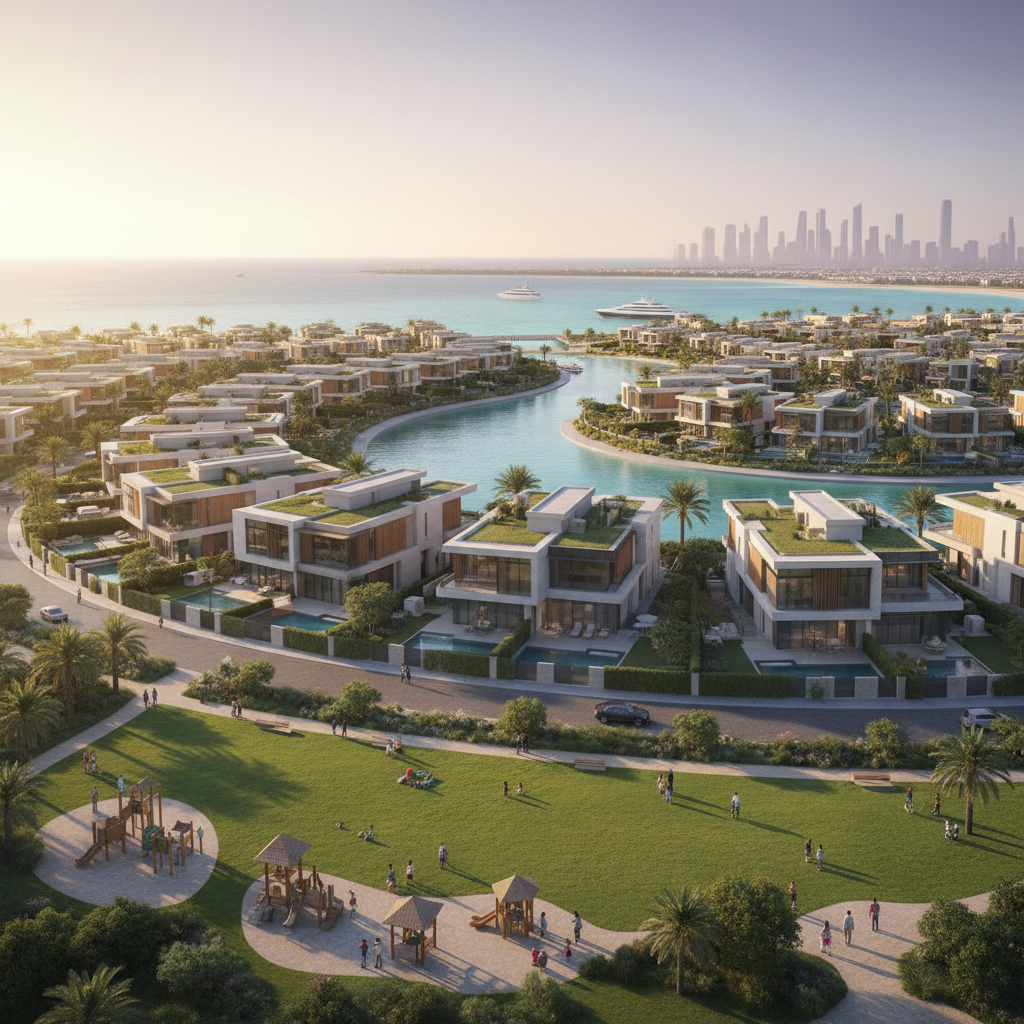
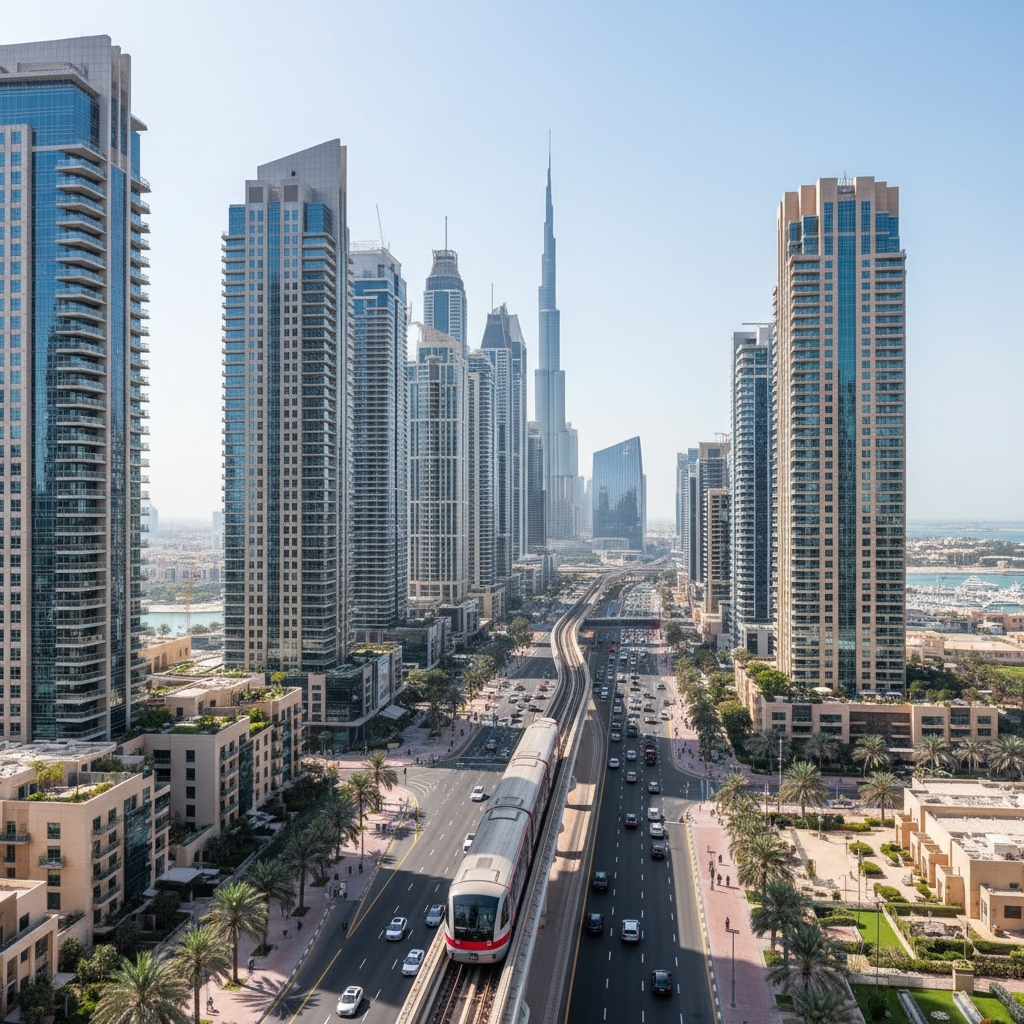 Abu Dhabi, Sharjah, and Ras Al Khaimah offer stronger affordability, tighter supply pipelines, and higher net yields for investors willing to trade liquidity for income.
Abu Dhabi delivers yield on lower entry prices
Abu Dhabi's average net rental yield for apartments sits around 4.2% in early 2026, once recurring costs are subtracted. Gross yields commonly range between 6 and 8%, particularly in Al Reem Island and Yas Island.
Residential prices grew approximately 52% in off-plan properties and 39% in ready units between 2021 and 2025. Gross rental yields reached 7.4%, reflecting sustained demand for high-quality developments.
Abu Dhabi's price-to-income ratio is generally more favorable for mid-market buyers, largely because average property prices per square foot remain 30 to 40% lower than in equivalent Dubai neighborhoods. A well-priced apartment typically finds a tenant within two to four weeks, and during peak demand windows in September to November, that can shrink to just 7 to 14 days.
Sharjah and northern emirates offer affordability
Sharjah maintains more affordable pricing at approximately AED 13,010 per square meter for median apartment properties as of September 2025. A new escrow law took effect in 2026, bringing buyer protections closer in line with Dubai and Abu Dhabi.
Ras Al Khaimah is expected to register a 10.36% CAGR as buyers seek more affordable villas yet retain access to Dubai's job market. Apartments make up approximately 70 to 75% of available residential listings across the UAE, with villas and townhouses accounting for most of the remainder.
These markets appeal to investors prioritizing volume over exclusivity, with strong demand from professionals who prioritize accessibility over coastal luxury. House Finder evaluates supply pipelines and connectivity projects to identify northern emirates poised for appreciation.
Supply dynamics favor Abu Dhabi in 2026
Around 120,000 units are scheduled for handover in Dubai in 2026, which will likely put pressure on prices and rents in the emirate, according to Fitch Ratings. Abu Dhabi has approximately 6,500 new residential units forecast for delivery, with limited new supply continuing to bolster both sales and leasing activity.
Market conditions in Abu Dhabi are likely to stay tight, supporting additional price and rental growth of 8 to 12% in 2026. The vacancy rate for apartments in Abu Dhabi in early 2026 is estimated at around 5 to 7% citywide, reflecting strong tenant demand driven by consistent population growth.
Dubai's vacancy rate sits between 4 and 7% citywide, meaning landlords still find tenants relatively quickly in most neighborhoods. Prime buildings run tighter at 2 to 3%, while oversupplied or less connected communities run higher at 8 to 12%.
Investment character differs between markets
Early 2026 activity in Abu Dhabi suggests the market is building on a strong base but shifting in character. Current trends indicate a preference for completed, income-generating assets over more speculative opportunities, with investors placing greater weight on asset quality, risk management, and income visibility.
Foreign direct investment by individuals totaled AED 6.2 billion over the first nine months of 2025, with capital inflows from 97 nationalities. Abu Dhabi attracts a high-quality investor base that values stability, strong planning, and sustainable growth.
Dubai's property boom is heavily fueled by international investors from Europe, Asia, and other parts of the Middle East. Buyers are willing to invest early in off-plan transactions, betting on continued price increases and demand.
How to decide based on your goal
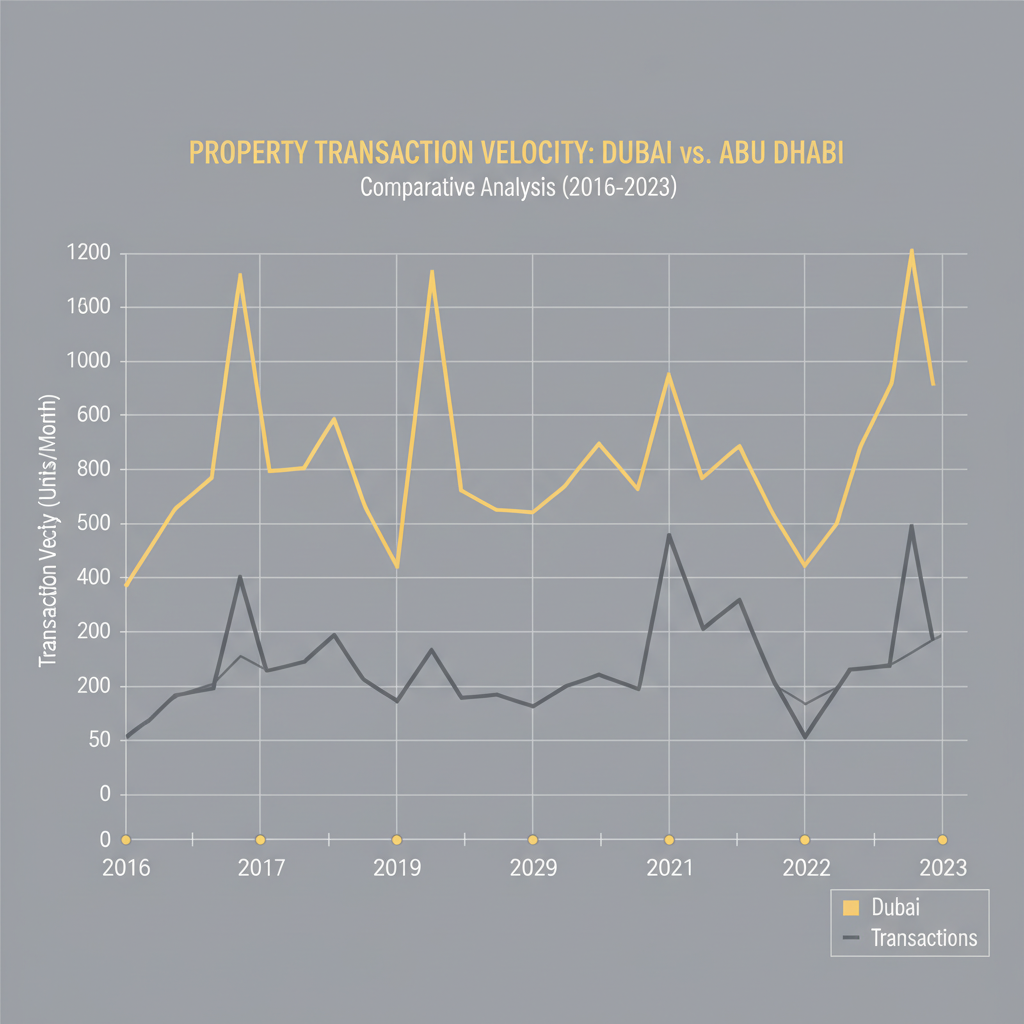 The right market depends on whether you prioritize yield, liquidity, or holding period. House Finder structures this decision around three core questions.
Match market to investment horizon
Short-term investors benefit from Dubai's liquidity and resale velocity. Properties in Dubai sell in an average of 35 to 50 days, and off-plan transactions allow flexible entry with milestone-based payment plans.
Long-term investors seeking stable rental income should evaluate Abu Dhabi and Sharjah for higher net yields and lower entry prices. Abu Dhabi's tighter supply pipeline and conservative development approach reduce volatility and support steady appreciation.
Holding period also determines property type. Studios and one-bedroom apartments offer higher gross yields of 7 to 8.5% in investor-friendly neighborhoods, while villas and detached houses produce yields between 4.5 and 6% but attract longer-term family tenants.
Align property type with income goals
Compact apartments act as the liquidity engine of the residential market, sustaining high transaction volumes even during periods of market transition. Two-bedroom apartments represent roughly 26% of the Dubai market, forming a middle layer between investment homes and larger lifestyle properties.
Larger homes—three-bedroom apartments and above—account for only about 7% of total transactions in Dubai. Although they represent a smaller share of overall activity, they often command significantly higher ticket sizes and contribute meaningfully to total transaction value.
Villas typically average rental yields closer to 5%, depending on location and supply. In Abu Dhabi, apartment yields commonly range between 6 and 8%, particularly in Al Reem Island and Yas Island, while villas generally average about 5%.
Factor in lifestyle and community fit
Dubai is often preferred by expats seeking a fast-paced, internationally driven lifestyle and broader employment sectors. Abu Dhabi appeals to those prioritizing family-oriented communities and a slower pace of life.
Dubai offers established master-planned communities with mature infrastructure, retail clusters, and proximity to employment hubs. Abu Dhabi's Saadiyat Island and Yas Island offer waterfront living with cultural amenities and beachfront access.
House Finder conducts property visits and community assessments to ensure alignment between investor goals and on-the-ground realities. This hands-on approach reduces the gap between data and lived experience.
Evaluate exit flexibility and market cycles
Dubai benefits from deeper liquidity and higher transaction volumes, which supports shorter holding periods and faster resale cycles. Abu Dhabi appeals to investors prioritizing stable tenant profiles and steady long-term demand, but resale timelines tend to be longer.
Price appreciation in Dubai is forecast to moderate to mid-single-digit levels of 5 to 8% in 2026, a marked slowdown from the 12 to 22% annual growth recorded during 2024 to 2025. Abu Dhabi's market remains strong with a 30% increase in sale prices by November 2025.
Rising supply into 2026 means investors should budget an 8% vacancy buffer, roughly one month empty per year, rather than assuming continuous occupancy. House Finder builds vacancy assumptions into yield projections to ensure realistic cash flow modeling.
Consider transaction costs and regulatory alignment
Both Dubai and Abu Dhabi make it relatively easy and accessible for first-time buyers and expats to buy property. This is supported by clear regulations, competitive mortgage markets, and freehold zones that allow full ownership, even to non-UAE nationals.
The 5% Dubai housing fee, charged monthly through DEWA bills, is often overlooked by new tenants and can add AED 250 to AED 500 to monthly costs. Service charges in Dubai high-amenity buildings can eat up to 1.7% of property value annually, making them the single biggest drag from gross to net yield for apartment investors.
House Finder provides end-to-end transaction management, ensuring clients understand all costs upfront and avoid hidden fees that erode returns.
Frequently Asked Questions
Which UAE emirate offers the best rental yield in 2026? Abu Dhabi delivers gross yields between 6 and 8%, particularly in Al Reem and Yas Island, on entry prices 30 to 40% lower than Dubai.
Is Dubai property more liquid than Abu Dhabi? Yes. Dubai properties sell in 35 to 50 days on average, with 86% of transactions conducted in cash, supporting faster resale cycles.
How much supply is entering Dubai in 2026? Around 120,000 units are scheduled for handover in 2026, which may pressure mid-market apartment prices and rents.
What property type delivers the highest yield in the UAE? Studios and one-bedroom apartments deliver gross yields of 7 to 8.5%, while villas average 4.5 to 6% across all emirates.
Should foreign investors prioritize Dubai or Abu Dhabi? Dubai suits investors seeking liquidity and exit flexibility. Abu Dhabi appeals to those prioritizing stable income and lower entry prices.